For too long, our retirement plans have been at the mercy of global forces thousands of miles away. It’s a disconnect that many of us feel our money is working for the global economy, but not necessarily for our own neighborhoods. In 2026, that’s changing. A new movement toward Community Capital is helping people take their wealth out of the "black box" and put it to work in their own time zones.
If you’ve been wanting to align your financial goals with your personal values, now is the time. Our FREE "Retirement Impact Income" webinar is the perfect starting point. We will show you how to participate in place-based investing that supports local infrastructure and regional growth. If you want to secure your future while making a tangible difference in the places you and your family cherish, this session is for you.
The Shift from Global to Local: A New Focus on Local Economic Growth
Hyper-local investing was once a niche movement, but has now become a broader, mainstream response to the global instability we’re seeing. The reason? Your portfolio feels the sting of events caused by supply chain disruptions, even thousands of miles away. It’s why so many investors are asking why their wealth feels so far from their day-to-day lives.
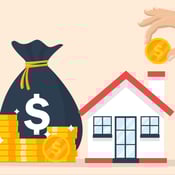 Instead of continuing to lean into the highly globalized economy we’ve grown up with, people are turning to local economic growth. It’s a return to our roots, and investors are prioritizing proximity without sacrificing profits. They’re putting their capital to work in tangible assets such as renewable energy projects, residential real estate bonds, and infrastructure projects, all within their own time zones.
Not only does this protect them from global supply chain shifts, but it also increases transparency and accountability. The traditional stock market can’t offer that these days.
What is Place-Based Investing?
Place-based investing is exactly what it sounds like. It’s the practice of keeping capital within communities where you live, work, and shop. It’s the financial equivalent of the farm-to-table movement. Instead of your dollars being sent to a foreign country or disappearing into the global economy, you choose to fund new residential developments in your county or a small business that wants to open another storefront in your town. The focus is on local economic growth, not stimulation of global trade and commerce.
This strategy relies on the economic multiplier effect. When you invest locally, that dollar circulates. It pays the wages of a local contractor, who uses it at the local grocery store, which in turn supports a local supplier of those groceries. It’s socially responsible investing that has an immediate, often visible, impact on your local town.
Studies have shown that local investments can generate up to three times the economic impact of a dollar spent at a national chain or invested in a global corporation. So, while you’re growing your bank account, you’re also watching your neighborhood flourish in the job market, tax base, and overall vibrancy.
Tangibility: The Hedge Against Wall Street
Assets, especially in our increasingly digital world, can sometimes feel like nothing more than pixels on a screen, but there are psychological and logical benefits to tangibility. That’s why real-world assets like residential real estate bonds backed by Worthy Property, community-funded real estate, and other related assets are a preferred hedge against Wall Street volatility.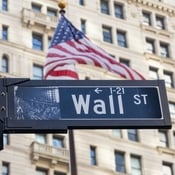
There’s nothing quite like knowing your investment is backed by something made of brick, mortar, and land, something you can see. You can drive past a Worthy-funded project while you head to work and see the progress with your own eyes. The social dividend, or the pride of seeing your community’s infrastructure improve, offers satisfaction that even a quarterly dividend check from a tech company couldn’t match. Seeing is believing has become a reality due to tangible asset investments in 2026.
Diversity Through Proximity: The Power of Non-Correlated Assets
Modern portfolio theory says that we have to diversify, but true diversification is all about owning non-correlated assets. A "non-correlated" return means that your investment doesn’t necessarily crash just because the S&P 500 had a bad day. And that’s great news for any investor, especially if you’re still learning how to invest in local businesses, impact investing for beginners, or what Community Capital is.
Local investments are often better protected against systemic shocks that disrupt public markets. A housing shortage in your specific region or the success of a local manufacturer is driven by local demand, not what’s going on in Manhattan or high-frequency trading algorithms. By shifting a portion of your portfolio to Community Capital, you’ll align your wealth building with your community’s well-being. In essence, you’re nurturing a financial ecosystem in which your success is tied to the success of the people and places you care about most. Place-based investing gives back to the places that you and your family cherish.
A Retirement You Can See, Powered by Community Capital
Your retirement shouldn’t be a mystery managed by a distant institution or affected by global events thousands of miles away from your home. In 2026, it can be something tangible, something you see every day on your drive to work or your walk through town. By embracing place-based investing and focusing on socially responsible investing, you’re making a stable, emotionally grounded choice for the community that has a lasting effect.
Ready to make an impact? We’ve got the tools and strategies you need to build a resilient, community-focused portfolio. Register for our "Retirement Impact Income" workshop today and learn how to bridge the gap between your financial future and your local community's growth with hyper-local investing and other alternative retirement strategies.

Want to learn more? Join us for our free webinar: Using Retirement Savings to Build Income and Create Community Impact
-
Live: Wednesday, April 29th. 2pm ET
-
Registration Link (Replays will be available after the event)
Article Highlights
-
What is place-based investing, and how does it work?
-
Place-based investing is a financial strategy where capital is intentionally directed into a specific geographic location, such as your own city or country, to support economic growth. Unlike traditional investing that focuses on global corporations, place-based investing funds tangible local assets like residential real estate bonds, renewable energy projects, and small business expansions. This keeps wealth circulating within the community, often creating a "multiplier effect" that strengthens the local tax base and job market.
-
-
How does local investing create a "social dividend"?
-
A social dividend refers to the non-financial benefits an investor receives from seeing their capital improve their own neighborhood. This includes the pride of funding local infrastructure, seeing a new community-funded real estate project thrive, or knowing your investment supported a local contractor’s wages. In 2026, many investors are prioritizing this "socially responsible investing" (SRI) because it offers emotional satisfaction alongside financial returns.
-
-
What are non-correlated assets in a retirement portfolio?
-
Non-correlated assets are investments whose performance is not tied to the broader stock market. For example, while a global tech company's stock might plummet due to an international trade dispute, a local real estate bond backed by a regional housing shortage may remain stable. Including Community Capital in your retirement plan provides true diversification, protecting your nest egg from systemic shocks that typically hit the traditional market.
-
- Can impact investing for beginners actually provide competitive returns?
-
-
Yes. A common misconception is that "doing good" means "earning less." However, studies on the economic multiplier effect show that local investments can generate significantly higher local economic impact than national chains. For beginners, starting with structured assets like residential real estate bonds allows for a balance of competitive yields and low entry barriers, making it an accessible way to transition from global markets to community-focused wealth building.
-